16–28 cm
Typical length (family range)
1/800 s
Shutter: perched / still
1/2500–1/3200 s
Shutter: action / flight
f/5.6–f/7.1
Aperture
14,722
Research-grade sightings in N. America
Recommended camera settings#
ModeManual + Auto ISOLock shutter & aperture, let ISO float
Shutter (still)1/800 s
Shutter (action)1/2500–1/3200 s
Aperturef/5.6–f/7.1
FocusAF-C + subject/eye detectionBird-eye AF with continuous focus (AF-C/AI Servo); fill at least a third of the frame.
DriveHigh-speed burst
Lens400–600 mmFull-frame equivalent
Focal length needed to frame it#
For a subject about 22 cm long filling a third or half of the frame width horizontally.
| Distance | ⅓ of frame (FF) | ½ of frame (FF) | ⅓ of frame (APS-C) | ⅓ of frame (MFT) |
|---|---|---|---|---|
| 5 m (16 ft) | 256 mm | 378 mm | 171 mm | 128 mm |
| 10 m (33 ft) | 512 mm | 756 mm | 342 mm | 256 mm |
| 15 m (49 ft) | 769 mm | 1,134 mm | 512 mm | 384 mm |
| 20 m (66 ft) | 1,025 mm | 1,513 mm | 683 mm | 512 mm |
| 30 m (98 ft) | 1,537 mm | 2,269 mm | 1,025 mm | 769 mm |
| 50 m (164 ft) | 2,562 mm | 3,782 mm | 1,708 mm | 1,281 mm |
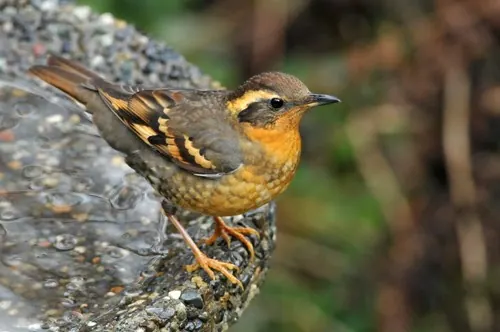
About the Varied Thrush#
The varied thrush (Ixoreus naevius) is a member of the thrush family, Turdidae.
Summary adapted from Wikipedia via iNaturalist (CC BY-SA 4.0).
Field-craft tips#
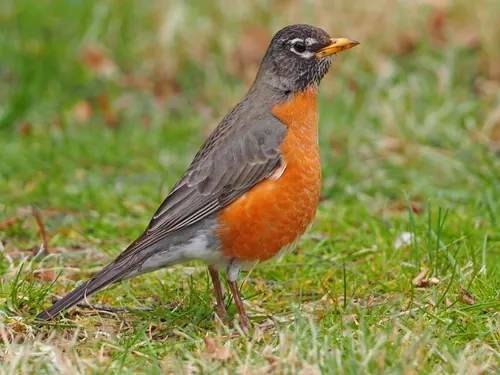
- Lawns after rain are reliable for robins.
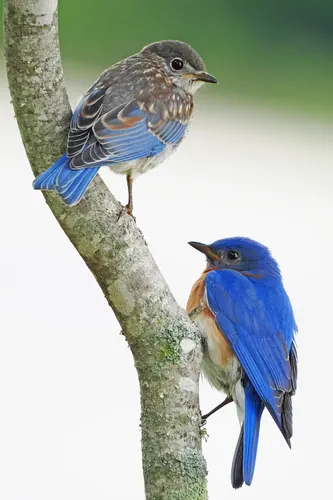
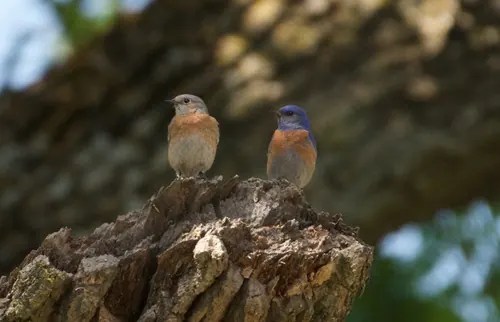
- Bluebirds use nest boxes — keep a respectful distance during nesting.
- Bird-eye AF with continuous focus (AF-C/AI Servo); fill at least a third of the frame.
- Sightings peak in January, February, March and December, which is when you'll have the most chances.
Ethics#
- The welfare of the animal comes first: if it changes its behaviour because of you, you are too close.
- Stay on trails, respect closures around nests, leks, dens and haul-outs.
- Avoid playback and baiting in sensitive seasons; never bait predators.
- Don't share precise locations of rare, nesting or roosting animals publicly.
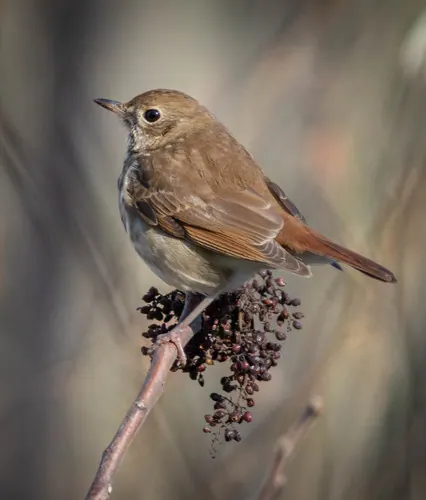
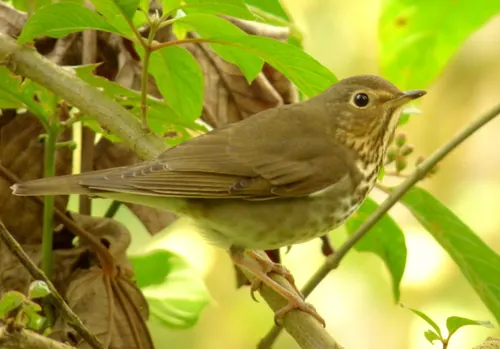
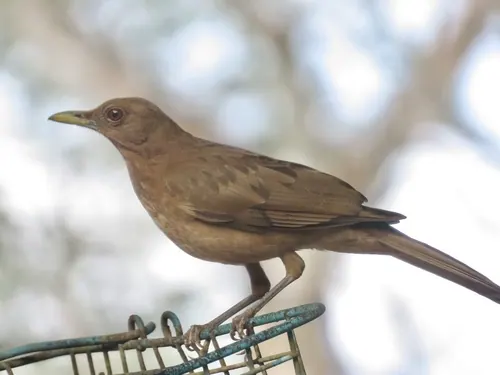
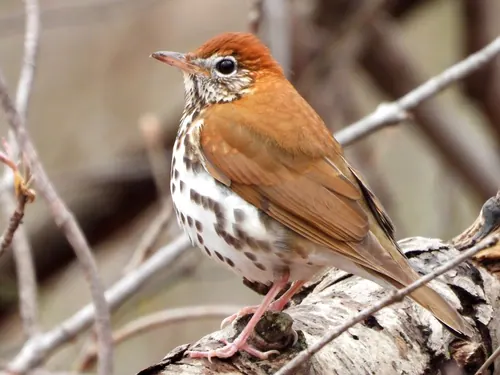
More Thrushes#
Frequently asked questions#
What lens do I need to photograph a Varied Thrush?
At about 22 cm long, a varied thrush fills a third of a full-frame image at 10 m with roughly 512 mm, or at 20 m with 1,025 mm.
What shutter speed should I use for a Varied Thrush?
1/800 s when it's still; 1/2500–1/3200 s for action.
When is the best time to photograph a Varied Thrush?
Observations in North America peak in January, February, March and December. Early morning and late afternoon give the best light and activity.
Sources & licences#
- iNaturalist — Observation data CC BY-NC; photo licence as credited
- Wikipedia — CC BY-SA 4.0
Last updated October 03, 2026 · How we calculate · Sources